
Don Bosco Tech Africa
Job Service Officers’ Quality Manual
A shared standard for the work of Job Service Offices across the Salesian TVET network in Africa and Madagascar - and the tool that measures how far each centre has come in applying it.
From school to work
The trainer trains; the Job Service Officer opens the door to the labour market. The manual sets out that transition in five steps.
-
1
Preparation
Awareness of TVET as a career choice, guidance towards a Vocational Plan and Life Plan, and competencies that match labour market demand.
-
2
Search and networking
Identify the stakeholders who can cooperate with the TVET centre, and strengthen internal and external networks.
-
3
Pre-placement
Prepare trainees for formal employment and for self-employment.
-
4
Placement
Link graduates to salaried employment, and assist those starting their own business.
-
5
Sustainable livelihood
A change in the standard of living among graduates, and enhanced personal and social responsibility. Did the intervention cause the change it set out to?
The seven quality missions
Six missions form a chain, each task linked to the next. A seventh runs across all of them.
Promote TVET as a career choice
Raise awareness of technical training as a route to employment and livelihood for youth, women, persons with disabilities and other marginalised groups.
Guide youth to a life project
Accompany every trainee in designing, monitoring and evaluating a Vocational Plan and Life Plan, including the training pathway that fits it.
Keep skills relevant to the labour market
Use labour market data, tools and equipment assessments and employer feedback to make sure what is taught is what the market needs.
Prepare trainees for the labour market
CVs, interviews, labour law, entrepreneurship and business planning, industrial visits, internships and workplace health and safety.
Build partnerships for employment
Map and work with industries, enterprises and online platforms that lead to waged, salaried and self-employment for graduates.
Evaluate external effectiveness
Measure what actually happened: placement, traceability, permanent and self-employment, graduate and employer satisfaction, and sustainable livelihood.
Measured by this tool
Communicate with stakeholders
The transversal mission: inclusive internal and external communication and networking that runs through all six missions above.
Three levels of performance
Every mission is described at three levels. The manual is a road map from the minimum a centre should have, towards excellence.
Minimum
The basics a TVET centre should have in place for the Job Service Office to function at all.
Standard
A Job Service Office that is resourced, systematic and working with employers and stakeholders.
Excellence
Evidence-based, inclusive practice with measurable outcomes for graduates, and data used to improve the training itself.
Where we work
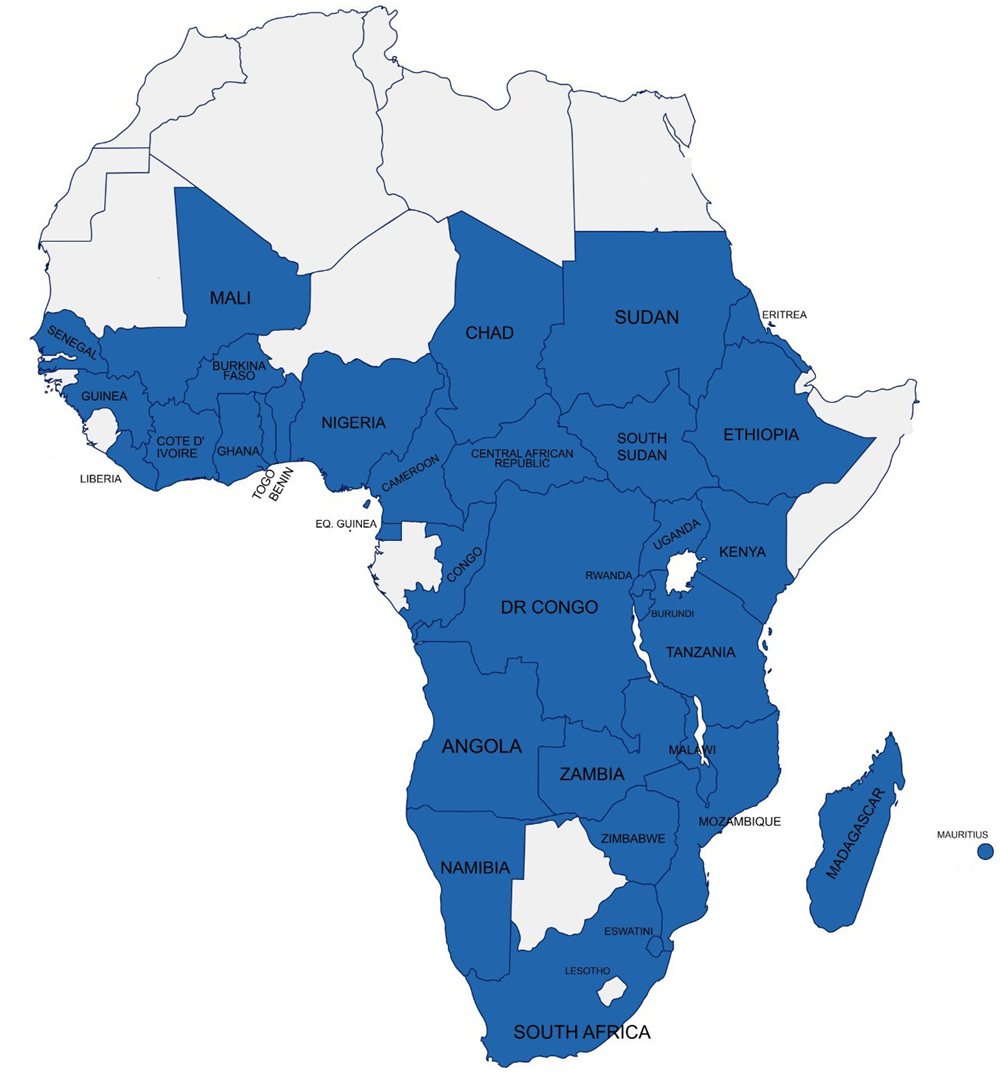
122 Don Bosco TVET centres in 35 countries, organised into 16 Salesian provinces across Africa and Madagascar.
Provinces are not nested inside countries: several span three or more. Results roll up along both dimensions, so a national office and a provincial office each see the picture that belongs to them.
Report your centre’s progress
Centres enter their graduate and placement figures once per reporting cycle. Every percentage, level and score is calculated from those figures - nothing is self-scored.
Content adapted from the Job Service Officers’ Quality Manual, 3rd edition, © 2026 Don Bosco Tech Africa. Prepared by the Salesian Job Service Officers of the Africa-Madagascar Region.